

✓Summary: The furniture on an exhibition stand determines the welcome, the brand image and the commercial performance at a show; in 2026,
✓At a trade show, every square metre must work for you.
✓According to the UFI Global Exhibition Barometer 2025, trade shows remain one of the most effective channels for generating qualified leads a
Why furniture has become a strategic part of the stand
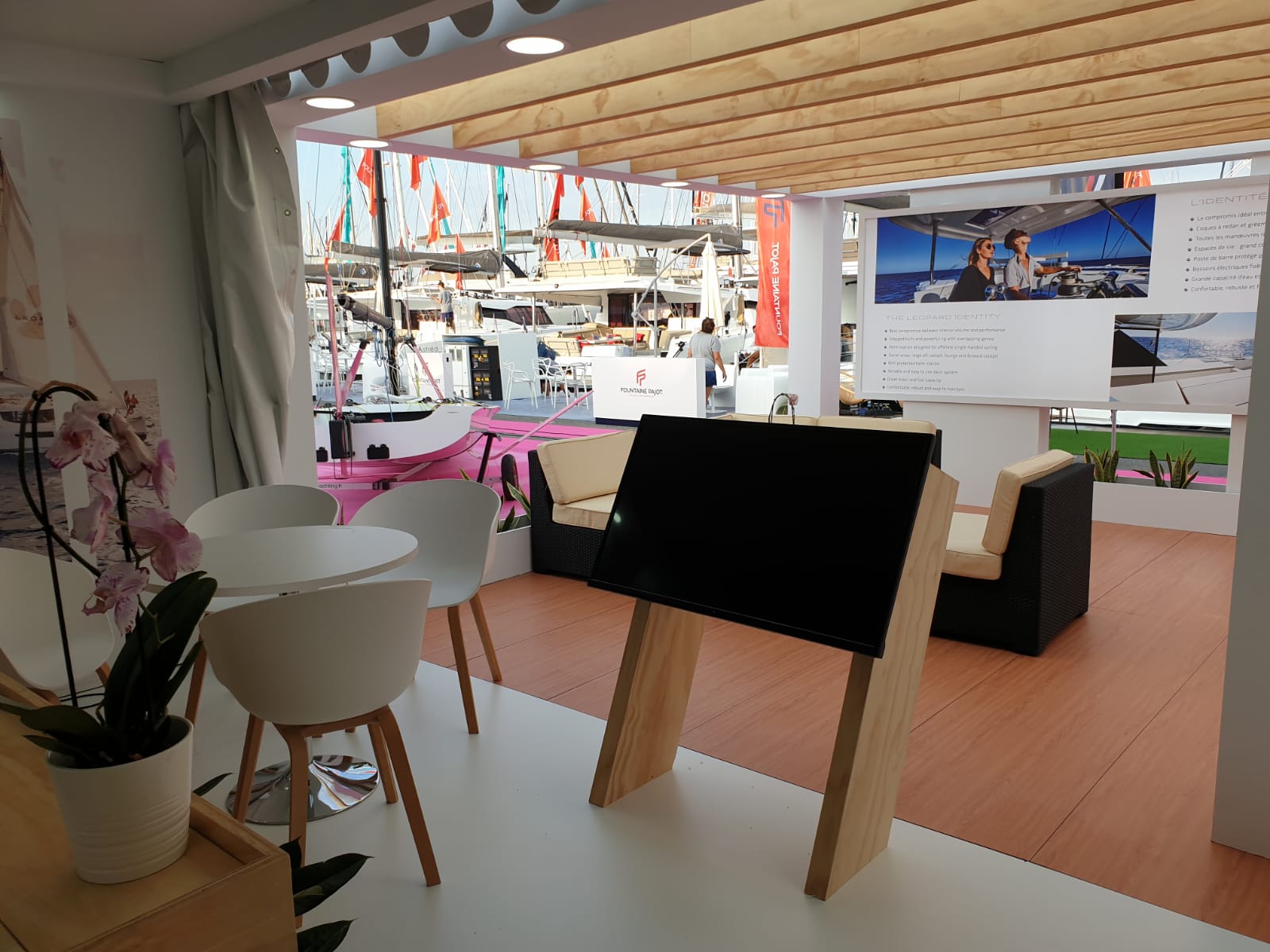
For a long time, furniture was treated as a mere logistical accessory: you rented chairs, a standard counter and a few stools. In 2026, this approach has changed radically. Furniture is now an integral part of the stand; it is no longer added at the end, but conceived from the design stage.
This shift reflects a growing awareness: a high-performing stand is a coherent whole in which every element has a precise role.
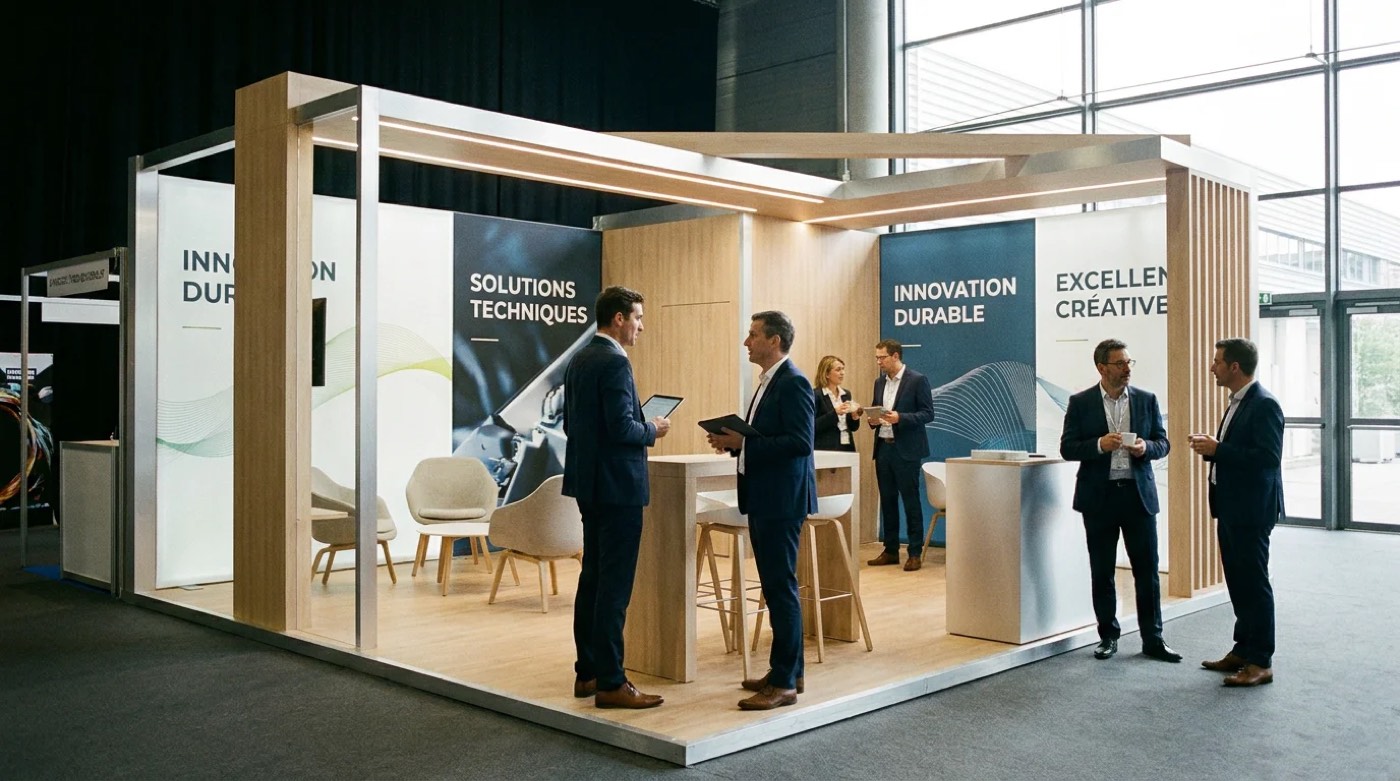
The "experience-first" trend is not a creative fad; it responds to a reality on the ground: visitors have less time, less patience and a shorter attention span in ever more crowded halls. Furniture contributes directly to this experience by creating comfortable conversation areas, functional demonstration spaces and a welcome that invites people to stay.
A well-placed counter naturally guides the flow towards your sales team. Comfortable seating extends the length of conversations. A strategically positioned high table encourages the informal exchanges that often lead to the best commercial opportunities.
The main categories of furniture for an exhibition stand
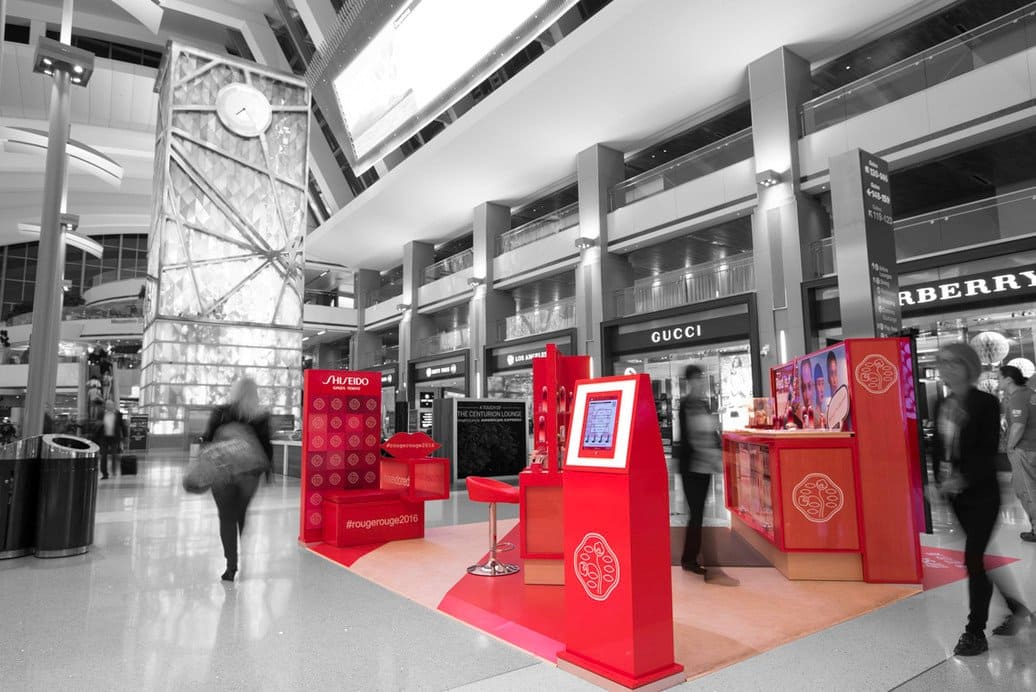
Each type of furniture fulfils a distinct function. Here are the essential categories to consider when equipping your space.
Welcome and reception furniture
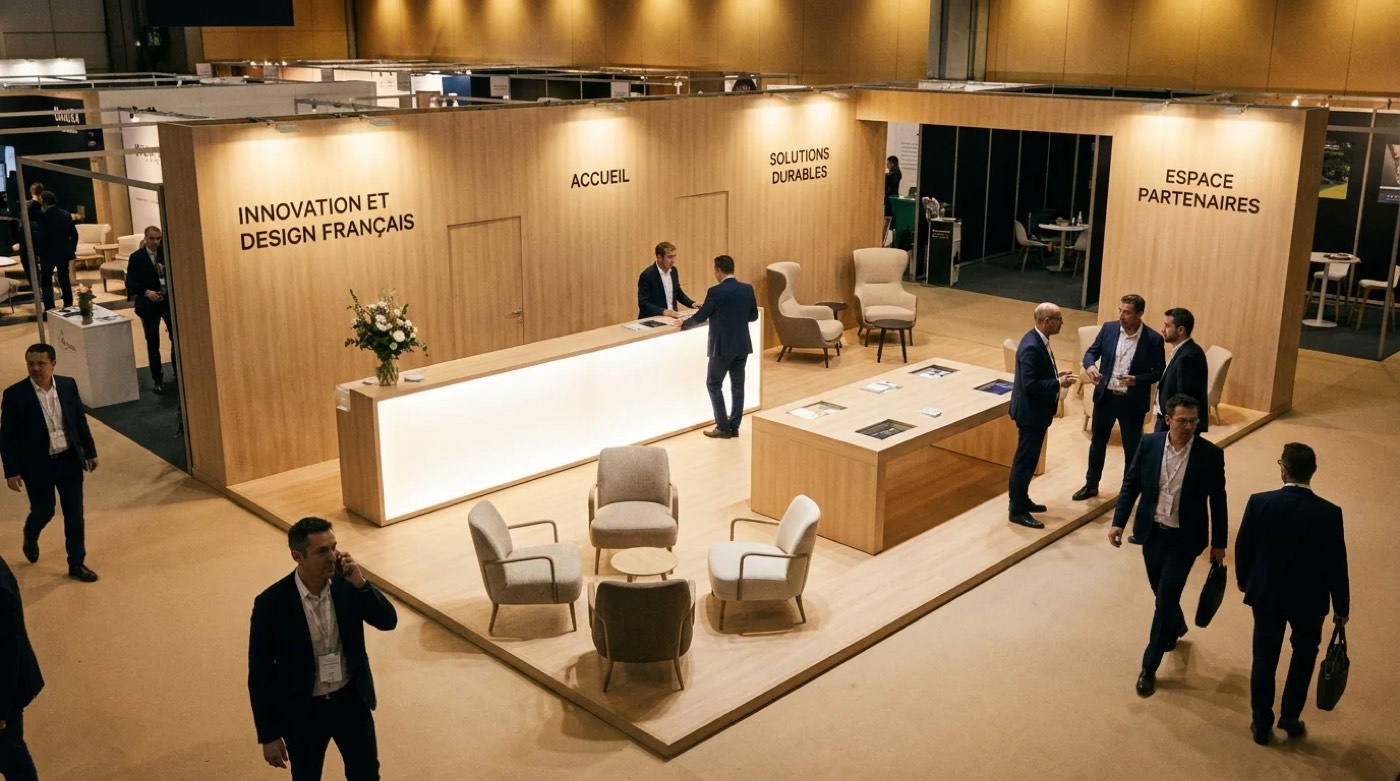
The reception counter is the centrepiece of any stand. It acts as the first point of contact with visitors, holds your communication materials and lets your teams quickly qualify prospects. It comes in fixed bespoke versions, foldable for transport, or inflatable for lightweight formats. For premium stands, a bespoke counter in your brand's colours immediately reinforces brand identity.
Demonstration and presentation furniture
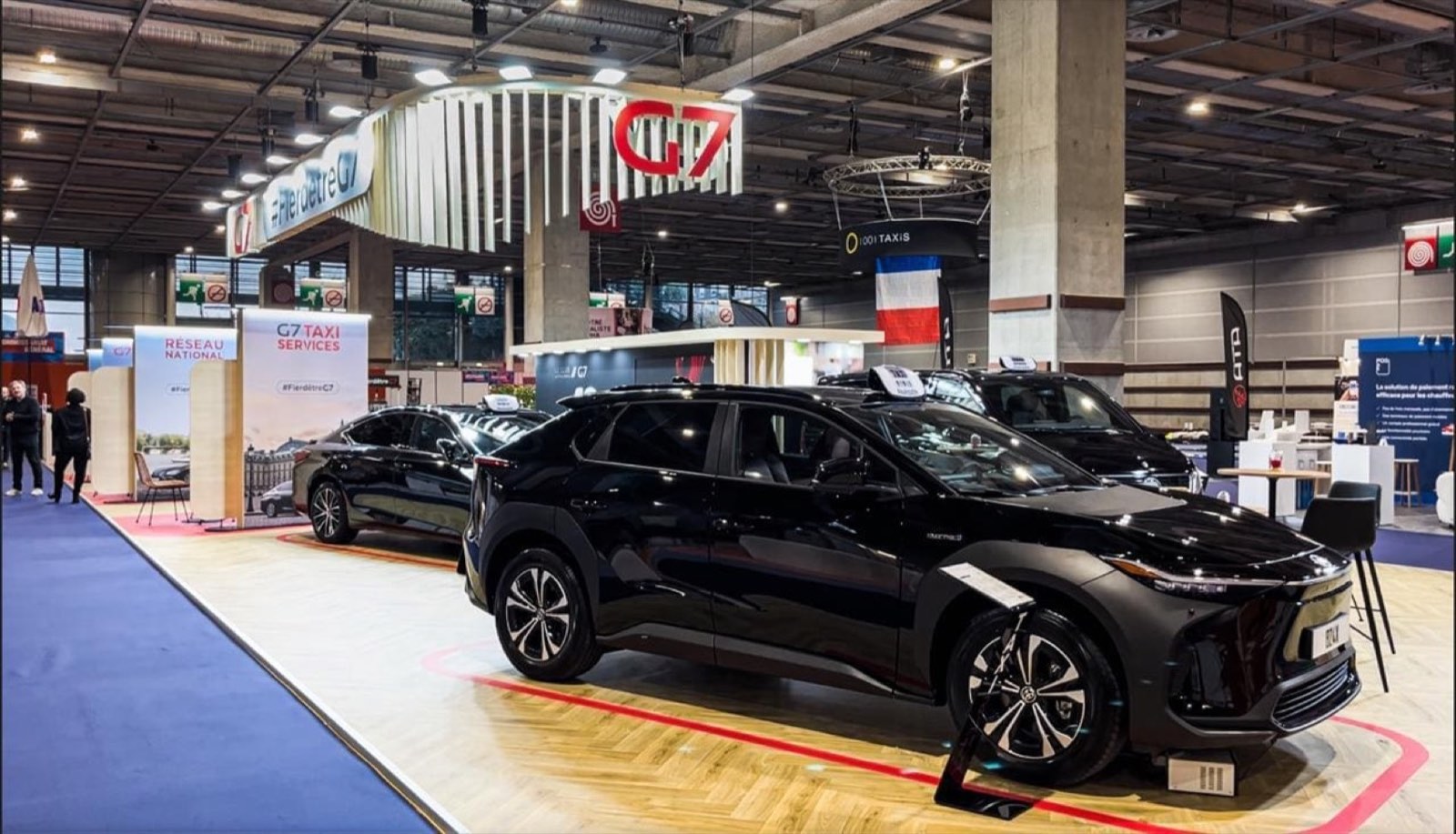
Demonstration tables, product displays, illuminated cabinets: this furniture showcases your offer. At a technical or medical show, a well-designed demonstration table can make the difference between a curious visitor and a qualified prospect. Integrating screens or tablets into presentation furniture has become common, enriching the experience without cluttering the space.
Comfort and negotiation furniture
Armchairs, sofas, high tables, bar stools: this furniture creates conversation areas conducive to in-depth discussions. At major international shows such as the IMCAS World Congress or AMWC Monaco, having a private, comfortable negotiation space is essential for closing deals. We systematically build these spaces into our approach to stand layout for trade shows.
Storage and stockroom furniture
Often overlooked, storage furniture (lockers, built-in shelving, closed stockrooms) keeps the space tidy at all times. Jackets, bags, surplus documentation, technical equipment: a cluttered stand projects an unprofessional image. Planning discreet storage from the design stage avoids this pitfall.
| Type of stand | Strengths | Who is it for? |
|---|---|---|
| Trade-show stand | Bespoke, strong image | Generating B2B contacts |
| Modular stand | Reusable, cost-effective | Regular exhibitors |
| Event stand | Immersive scenography | Launches, brand experience |
| Double-decker stand | Doubles your floor space | Large shows, limited space |
How to choose the right furniture for your show
Three fundamental criteria guide the choice: the use (one-off or recurring), the available surface area and the main commercial objective of your participation.
One-off or multi-show use: if you take part in a single major event a year, bespoke furniture designed specifically for your one-off custom stand maximises impact. If, on the other hand, you take part in several shows during the year, a modular system helps reduce costs over the long term, adjust the configuration to the surface area and simplify logistics.
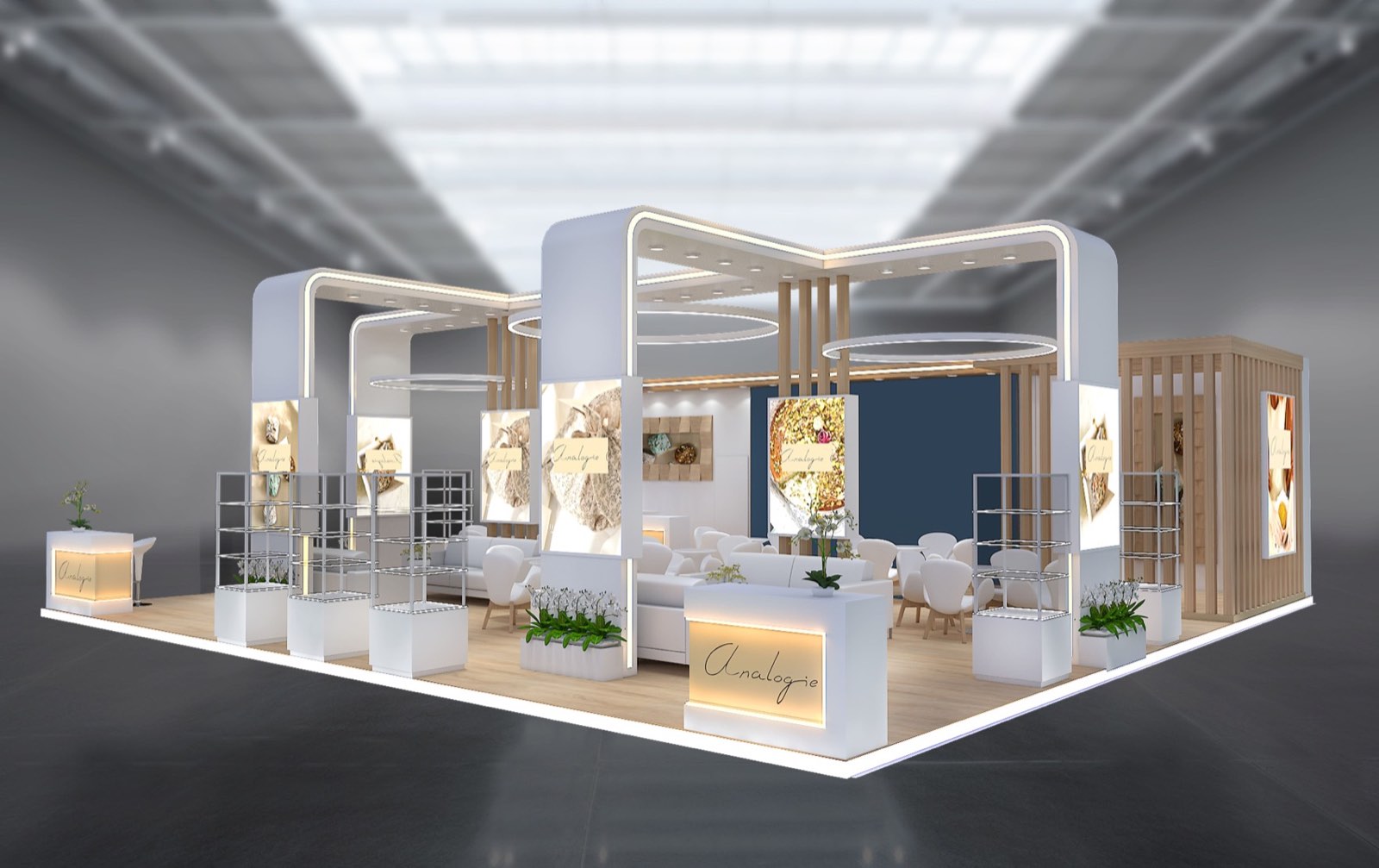
Surface area and configuration: on a 9 m² stand, a compact counter and two stools are enough. On 36 m² or more, you can structure the space into distinct zones: welcome, demonstration, negotiation and stockroom. The golden rule is never to saturate the space; the trend encourages the strategic use of open spaces and strong visual elements without overload, to create immediate impact.
Commercial objective: a stand geared towards lead generation will favour an open counter and high tables that encourage quick exchanges. A brand-building stand will bank on comfortable seating and immersive scenography. A product-demonstration stand will require technical tables and targeted lighting.
Furniture and design trends for stands in 2026
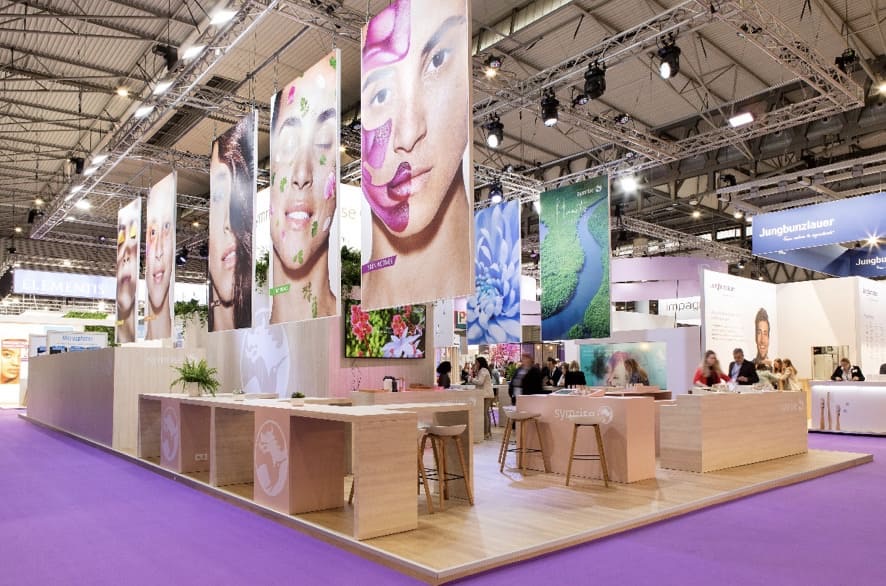
Trade shows mirror the aesthetic and technological developments of the moment. Several strong trends are shaping stand furniture in 2026.
Natural materials and premium minimalism: light wood is everywhere in 2026. Combined with fine metal or natural textiles, it creates warm, legible stands. According to a trend analysis published by Iconik Global, stands are moving towards more restraint, more meaning and above all more coherence.
Furniture-integrated lighting: in 2026, lighting has become a central part of stand design. Light lets you prioritise messages, guide the eye and structure the space without adding material. Good lighting design turns a simple stand into a striking space.
Discreet, integrated technology: digital is becoming more discreet but better integrated: screens embedded in the architecture, niches, frames and totems. Technology should enrich exchanges, not replace them; it becomes a support for the experience, not an end in itself.
A sensory approach: the stand is no longer only seen, it is felt. Materials create an emotional connection and an atmosphere that can be warm, serious or high-tech depending on the brand's positioning.
A stand that looks like you, a show that truly pays off.
Request a quoteEco-design and furniture reuse: a must
The trade show industry generates a significant amount of waste each year, and the use of non-recyclable materials as well as the destruction of structures after a single use are still common practices. In light of this, the eco-design of furniture is no longer a marketing argument: it is a requirement shared by exhibitors, organisers and visitors alike.
A sustainable stand is thought through from the outset with one simple question: what will happen to the elements after the event? This question influences the materials, the formats, the assemblies and even the scenography.
An element designed to be cleanly dismantled has a better chance of being reused, and furniture chosen for several events has a longer lifespan. This logic is detailed in a forward-looking analysis by Iconik Global on the future of stands.
Our 100% eco-responsible commitment translates into concrete action: we design every piece of furniture so that it can be dismantled, stored and reused across several events. This approach lets our clients turn a one-off expense into a lasting investment while reducing their environmental footprint.
The subject is all the more important as Europe is gradually tightening its framework against misleading environmental claims. The proposed Green Claims Directive faced uncertainty in 2025, but the objective remains clear: to combat vague or unfounded claims. For exhibiting brands, this means that every furniture choice must be backed by concrete data.
Bespoke furniture vs standard furniture: comparison table
The choice between bespoke and standard furniture depends on your event strategy, your budget and how often you take part. Here is a concise comparison to help you decide.
Criterion | Bespoke furniture (Decore Studio Events) | Standard / catalogue furniture | Modular furniture |
Customisation | 100%, aligned with brand guidelines | Limited (choice of colours) | Medium (interchangeable coverings) |
Visual impact | Very high, differentiating | Low, generic | Decent, uniform |
Reusability | Yes (storage and adaptation possible) | Yes (multi-event use) | Yes (reconfigurable) |
Cost per event (multi-show) | Decreasing with storage | Low to buy, little differentiation | Optimised over 3+ shows/year |
Logistics support | Turnkey (installation, dismantling, storage) | The exhibitor's responsibility | Varies by provider |
Production lead time | 4 to 8 weeks | 3 to 10 days | 2 to 4 weeks |
For a first show or a limited budget, standard furniture offers a functional solution. Modular furniture does not replace bespoke, but fits into a complementary event strategy. For brands seeking maximum impact and full coherence with their identity, bespoke remains the benchmark. It is also worth formalising your needs in a brief for an exhibition stand to frame the project precisely.
Furniture budget: which items to plan for
Furniture generally accounts for between 15% and 25% of a stand's total budget, depending on the level of service. Each show appearance involves a set of costs: design, manufacture, transport, build, dismantling and storage. When these cost items are repeated several times a year, optimisation becomes essential.
The main items to budget for are:
Design: 3D design and prototyping
Manufacture: materials and labour
Logistics: transport and handling
On-site installation
Inter-show storage
A stand used across several shows in the year can quickly reduce its cost per event compared with a design that is fully renewed at each appearance, thereby turning a one-off expense into a strategic investment.
For a precise estimate tailored to your project, our dedicated page on the cost of an exhibition stand details the various items and budget ranges.
Best practices to maximise your return on investment
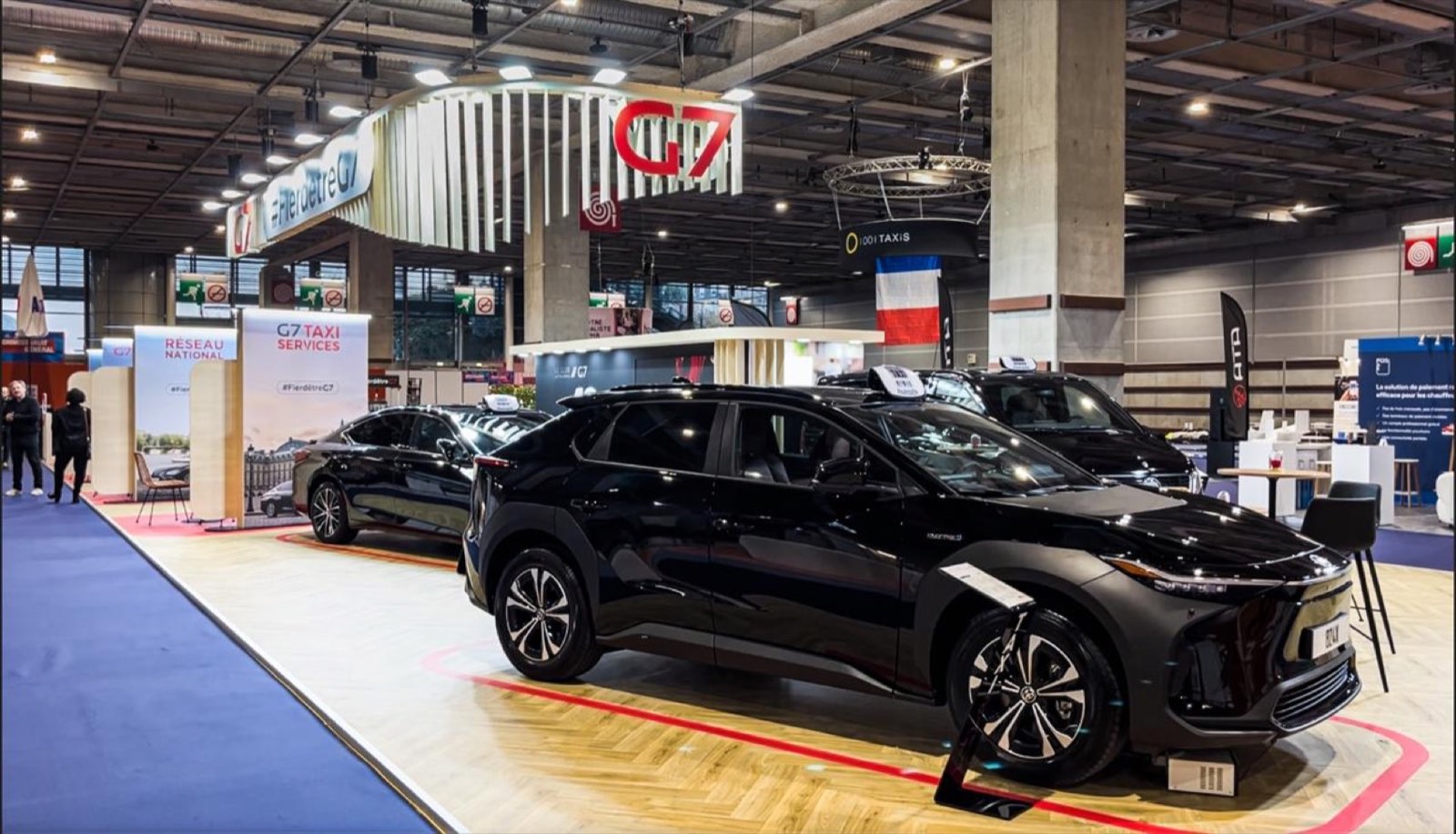
Beyond the choice of furniture, certain practices help you make the most of it at every show.
Test the ergonomics before the show: a counter that is too high, a table that is too deep or uncomfortable seating can compromise the visitor experience. The three essentials for a successful stand are visibility, ease of access and the quality of the welcome. Furniture directly shapes these three criteria.
Think about circulation and flow: position the reception counter facing the main aisle to capture the flow. Place high tables around the edges for quick exchanges, and keep comfortable seating set back for in-depth discussions. A stand should be easy to access and open to the outside.
Integrate signage into the furniture: printed counters, illuminated boxes, integrated totems: signage should not be stuck onto the furniture but designed with it. As a study of 2026 design trends points out, combining physical and digital experiences, including interactive kiosks and virtual demonstrations, is a major trend.
Plan the dismantling from the design stage: furniture designed to be easily dismantled, transported and reassembled reduces logistics costs and extends the lifespan of each element. Our stand storage and reuse service fits fully into this logic.
By combining stand furniture suited to your objectives, durable materials and a design built for reuse, you turn every show into a profitable investment.
With more than 20 years of experience, 150 premium projects delivered and a 100% satisfaction rate, our turnkey support, from the initial brief to dismantling, guarantees a space worthy of your ambitions. To bring your project to life, discover our stand layout support and let's talk about your next show.
Frequently asked questions
What minimum furniture should you plan for a 9 m² stand?
A compact reception counter, two bar stools and a brochure holder make up the essential kit. If your objective is product demonstration, replace one stool with a small presentation table. Favour foldable or stackable items to make transport easier.
Should you buy or rent your stand furniture?
For a one-off appearance, renting is often more economical. If you take part in two shows or more a year, buying (or bespoke design with storage) becomes more cost-effective. At Decore Studio Events, we offer the manufacture, installation and storage of your furniture between events, which optimises your investment over time.
How can you fit furniture into an eco-responsible approach?
Choose certified materials (FSC wood, recyclable aluminium, reusable M1 textiles). Design every element so that it can be dismantled and reused. Measure your results: percentage of elements reused, waste avoided, local suppliers used. This traceability is becoming essential in the face of growing European requirements on environmental communication.
Further reading 📚
▸ Salon SME 2026
▸ Messe München
▸ AUMA: the German trade fair federation
▸ Salon des Maires 2026
Every project is unique. Tell us about your show, your floor space and your objectives: we will come back to you with an initial concept and a detailed quote within 48 hours.